

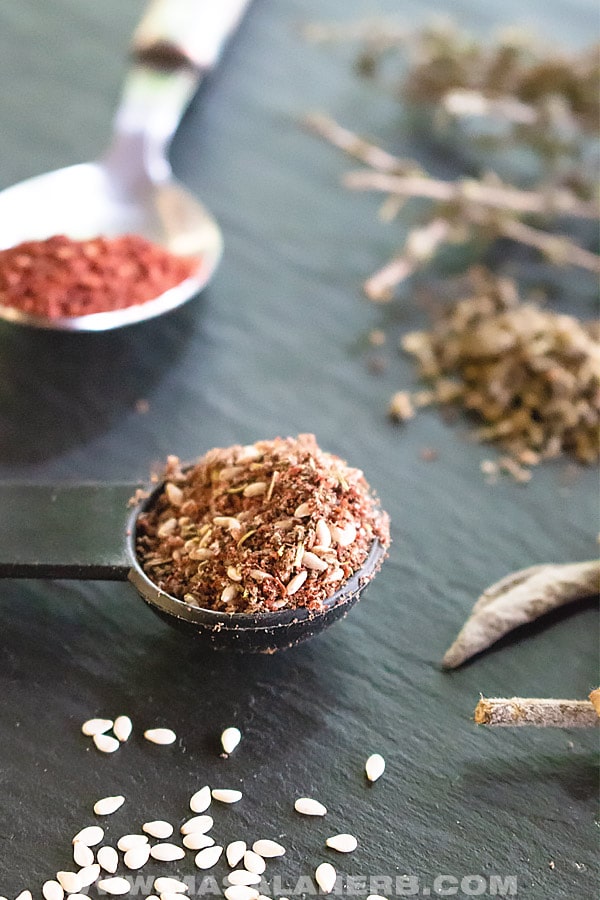
A flavorful Lebanese Za'atar Spice Blend recipe so that you can make this wonderful Mediterranean spice blend at home with your own spices.
Global Food Recipes
with Spices and Herbs
Free E-Book available for a limited time. Grab yours now and get instantly inspired!
You missed out!
What is Za'atar?
"Za'atar" has two meanings. Za'atar is the name given to certain herbs in the Middle East/Mediterranean area. This includes prominently thyme, hyssop, oregano, and savory and similar plants such as marjoram.
Za'atar is a seasoning spice blend made of these herbs and more. The most well-known is the Lebanese Za'atar.
When people in these regions say "Za'atar," they just mean the herbs growing behind the back of their homes, and because local ingredients are intensively used in the daily cuisine, it was just fitting to name the blend of herbs and spices as "Za'atar."
Za'atar is a common seasoning in Lebanon, Israel, Palestine, Syria, and Jordan and regions touching this area, including Iraq, Saudi Arabia, Cyprus Island, and Turkey. This geographical area is also known since antiquity as the Levant. This is a huge area, so you can imagine that the Za'atar in Lebanon will be different from the one in Israel.
Za'atar is actually one of those cherished family recipes, and locals typically don't share these kinds of recipes with strangers. Just as they wouldn't tell how they make their bread, each home claims to prepare the best recipe, and things can get heated when you want to talk about the best za'atar or shakshuka in this world.
I think you get the picture.
Za'atar is used daily as the first thing in Middle Eastern homes. In traditional places, it's still commonplace that the women prepare the bread early mornings, and Za'atar with olive oil is spread over the flatbreads before they are taken to a communal bakery and baked.
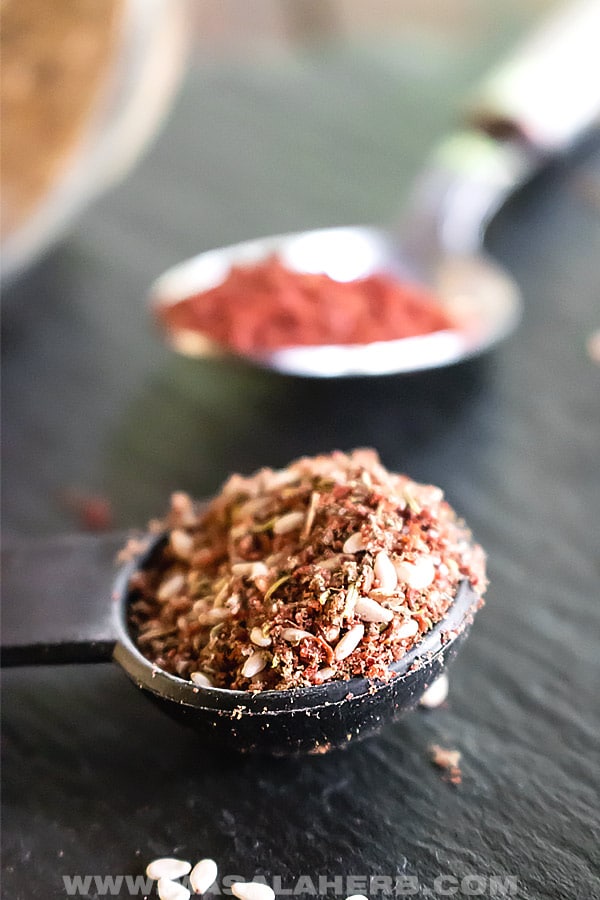
Ingredient Notes
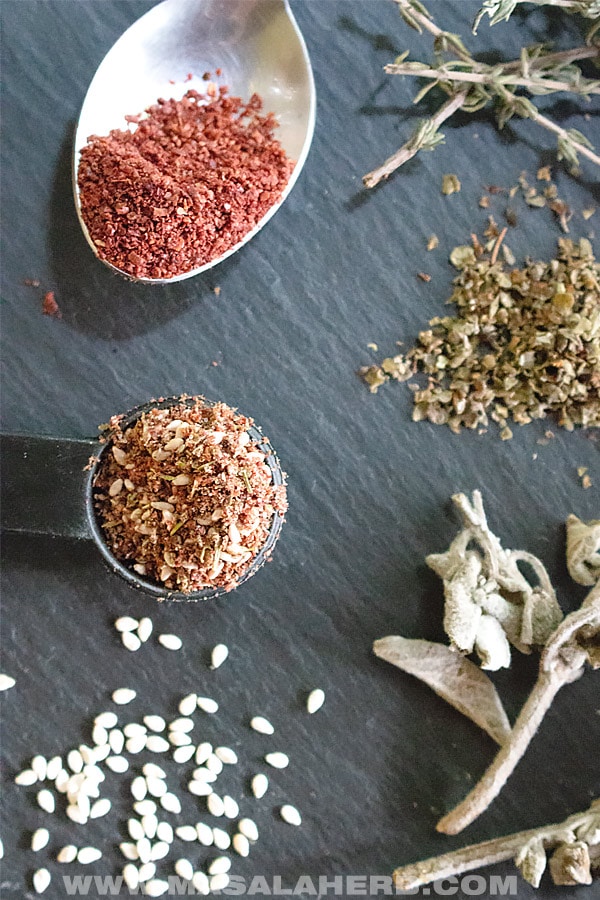
Za'atar tastes fresh thanks to the combination of herbs, the sour sumac, and the toasted sesame seeds. The Za'atar flavors need to transport you to those Middle Eastern villages, where all the ingredients grow on the hot, dry hills around the small villages.
I chose the following ingredients for my Za'atar mixture, whereas each ingredient finds purpose in one way or the other. Of course, keep in mind there are countless Za'atar recipes out there. Yet, I like this recipe for its balanced flavors and tart touch.
Thyme
Thyme lends the Lebanese Za'atar the classic base flavor. It's a refreshing herb with a strong, unique aroma. Thyme grows well in arid areas with plenty of sun, and it's a herb that grows without problems as long as there is no frost. Thyme is usually harvested in the summer months and then dried to be used the rest of the year.
Marjoram or Oregano
Marjoram and oregano are similar in taste and character. Yet I believe Marjoram works best in this Za'atar spice blend. However, I am well aware that most people don't keep marjoram in the pantry, so I give you the option to use oregano instead.
Savory
Savory is super important in this Za'atar spice blend, as it is the flavor link between the herbs and the other ingredients. It balances out the za'atar and adds another aspect of freshness to the za'atar.
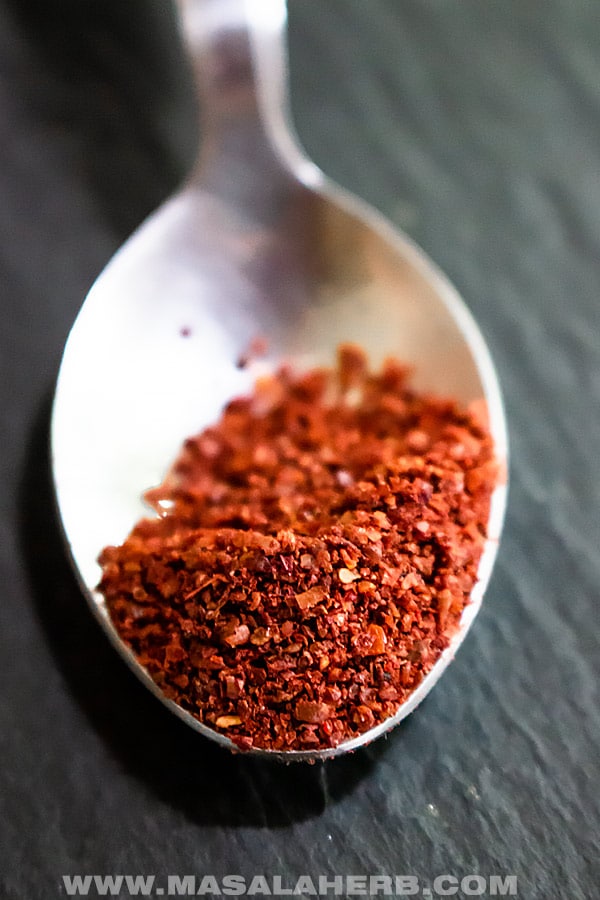
Sumac
Sumac is a sour, tart spice from dried red sumac berries; it's not that well-known outside the Middle East, which makes it difficult to track down. Sumac is an essential ingredient in this Lebanese za'atar, and I suggest not skipping this spice, as it gives the spice blend the sour touch, which makes za'atar so special.
You can buy pure ground sumac, and it's completely worth it because you can use sumac to season all kinds of food, not just Middle Eastern hummus (I make a Hummus without Tahini), and soups.
I add some sumac on my oven-roasted chicken too; it adds a tart aroma to other Middle Eastern and Mediterranean dishes. If you are looking for a semi-decent sumac substitute, try using dried lemon acid concentrate or simply lemon juice in your dish.
Sesame Seeds
The sesame seeds make the zaatar so very Middle Eastern! Usually, white sesame seeds are used, but I think black ones can be used as well. It's just the white sesame seeds are not ground but left whole, and they pop out in the spice blend, which kind of looks nice when you use the spice blend on foods.
What is important is the toasting of the sesame seeds so that the flavors come out. The warm toasty flavors give the Za'atar a homely feeling.
📖 Recipe

Lebanese Za'atar Spice Blend Recipe
Ingredients
- 1 Teaspoon Sesame seeds
- 1 Teaspoon Thyme Dried
- ½ Teaspoon Savory Herb Dried
- 1 Teaspoon Marjoram or Oregano Dried see Note
- 1 ½ Teaspoon Sumac
- ¼ Teaspoon Salt
Instructions
- Place the Sesame seeds into a small pan and dry toast the sesame seeds until you can smell them toasting or see them popping up. Keep aside to cool.
- In a mortar and pestle add the thyme, savory, marjoram, and sumac. Pound all the ingredients until well mixed and you can smell the spice blend forming.
- In a small bowl or container combine the previously pound ingredient mixture with the sesame seeds and salt.
- Store in an airtight container until further use.
Notes
Nutrition
Tips
When you make Za'atar from scratch, you need to take care of one aspect, and that is dry ingredients. The herbs need to be crispy and should crumble easily between your fingers.
That way you will have an easier time preparing the Lebanese Za'atar because the herbs have to be ground dry. If you find your dried herbs are not that crispy, then you can just heat a small pan and add your herbs to the pan for a few seconds until they get a bit crisper.
I have encountered this problem in humid conditions with a room humidity level of +55%. For the Za'atar, you will have to grind the herbs small with the sumac. Use a mortar and pestle for that; there is no need for a mixer because the pounding does it best and results in a very attractive aromatic spice mixture.
The sesame seeds are toasted so that the oils of the seeds come to the surface, which in turn intensifies the comforting sesame flavors. Then you just need to mix all ingredients and store them in an airtight container. I make sure to use glass containers so that I see all my spice blends and a rack so that it's not in my way.
Uses
- On Flat Bread (Manakish)
- Over French fries or potato wedges as seasoning
- Mixed into Fatoush salad or Tabbouleh
- In Mujadara Rice
- To season grilled chicken or vegetables
- In Labneh
- Over hummus, which I serve with sesame chicken schnitzel
- Add to falafel mixture
- Over chickpea soups or red lentil soups, such as for the Turkish red lentil soup dressing
- Over fresh cucumber dishes
- Great too with autumn root vegetables, like potato mash, carrot mash, kohlrabi.
- I add a pinch over my fried eggs
- Or I sprinkle za'atar of my favorite shakshuka with feta
- Seasoned lamb chops
- Za'atar crackers
The beauty of Za'atar is that you can use it in a very creative way without messing up a dish. In fact, I found it to be super versatile.
More Homemade Seasoning ideas:
Hello! Thanks for the recipe. I really appreciate your thorough explanation and tips. I'll be making some soon. You mentiomed that sumac is hard to come by outside of the middle east, but that is only because we in the US have forgotten how to live off our own land. Sumac grows wild here. And abundantly in many areas. 😁 if you know what to look for, we can easily forage it for free, with minimal effort. Look it up!I think most of us will be surprised to find out that we are already quite familiar with this plant that is SO EASY to identify.
Hi Cyndi. I learned that a while back and forgot to change this in the post. But I also learned that there are different varieties of Sumac and that some are poisonous. Therefore, I'm hesitant to tell folks to go foraging for it, since I don't know the varieties that you guys have growing in the wild.
One of my favorite ways to have it is to melt some butter and add za'atar. Then I dip pieces of rotisserie chicken and eat that way. Really delicious!
That just sounds amazing Diane! YUM!
I was from sudan , is the sumac which we had red bud leaves known as karkade which is very very sour and tangy in taste and we used to make drink out of it which is very cooling
Hi Meena, I heard of a drink but never saw or had a chance to try it. Do you have a recipe and what do you call it in your language? Thank you for sharing 🙂
I never knew what was actually in a zaatar spice blend until I read your great post. I also loved the background of where it came from and that everyone has their own special way of making it. Now I've just got to find some sumac (which, where I come from, is a plant similar to poison ivy - yikes!) and make some fresh zaatar to try on flatbread and autumn vegetables.
It's such a great combination of flavors! I love sprinkling it over naan and humus!