

A guide explaining how to cut leeks—from garden to plate. I show you 3 different ways to cut leeks and share, at the same time, how to clean and trim leeks from A to Z.

Global Food Recipes
with Spices and Herbs
Free E-Book available for a limited time. Grab yours now and get instantly inspired!
You missed out!
Jump to:
TL;DR
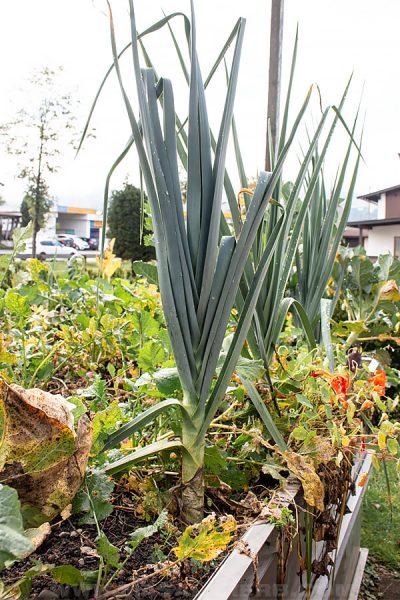
Leek is a green and white elongated vegetable stalk, which is related to onions and spring onions. The green vegetable has a mild onion-like flavor, but it's rather mellow compared to onions.
I love leeks! I turned it into one of my favorite vegetables over time. The vegetable tastes great, and it can be used really creatively in various recipes (e.g Asian-inspired hot and sour soup with noodles)
It looks like a big brother of spring onions, as it can get about 2 inches (ca. 5 cm) thick. The dark green leaves tend to turn tough the older they get and are rather inedible.
The edible parts of a leek are the white stalk, with the roots trimmed off, up to the still-soft parts. Leeks are grown in the northern hemisphere from April to late October and are harvested from July to October (or just before the first snowfall).
How to Clean Leeks
Leeks can be a bit annoying to clean because mud tends to get trapped between all the leaf and stalk layers. Fret not! There is a straightforward hassle-free way to clean leeks, and I show you how in the steps below and in my recipe video at the bottom of this post.
Step 1
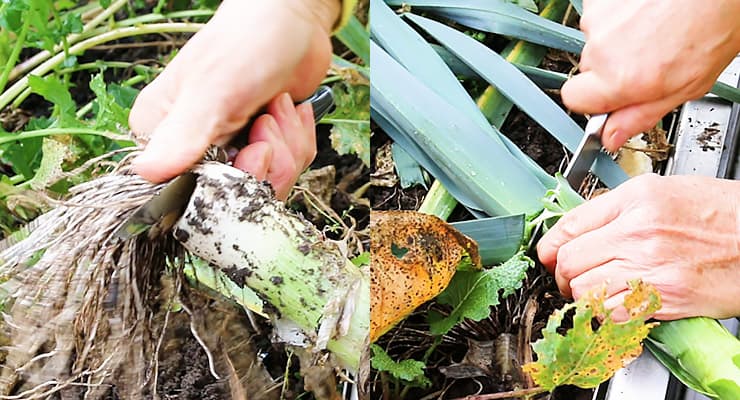
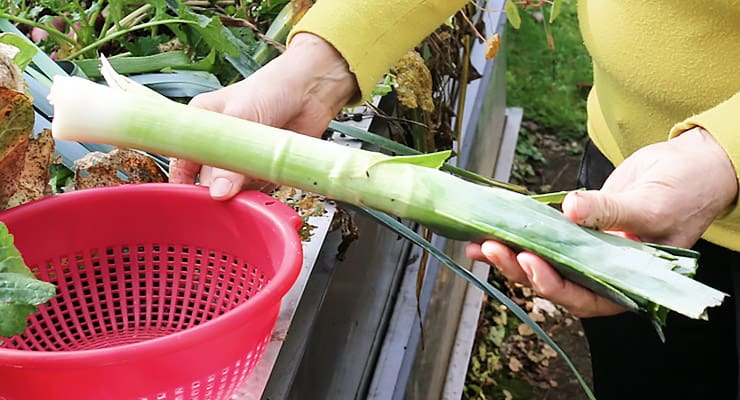
Trim off the roots and remove the dark green part, the tough upper green leaves.
Keep the softer green stem leaves because those are still edible and good, so just trim off the difficult-to-chew leaves. Remove damaged top layers of your leek.
Step 2
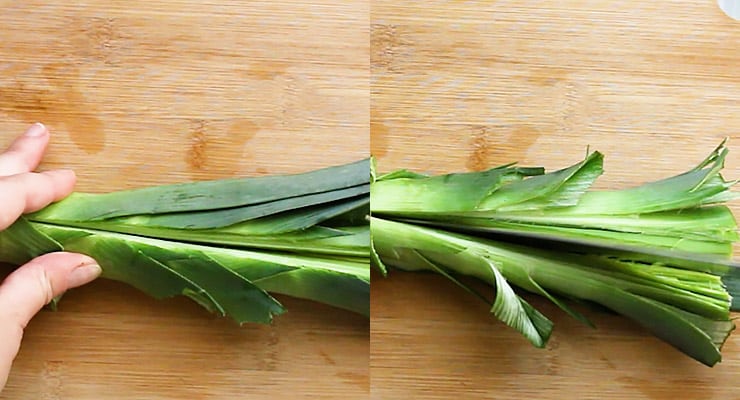
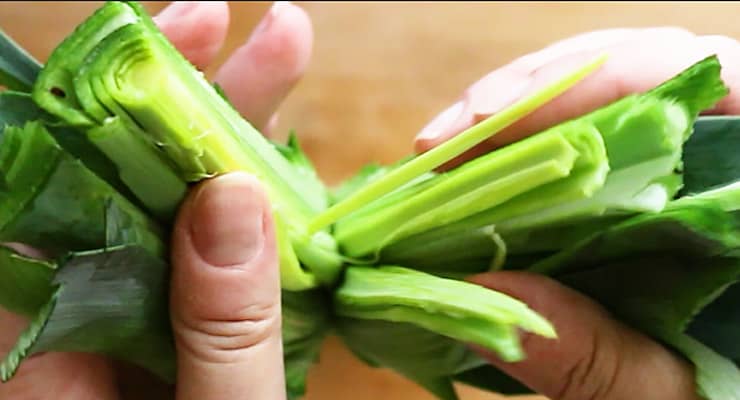
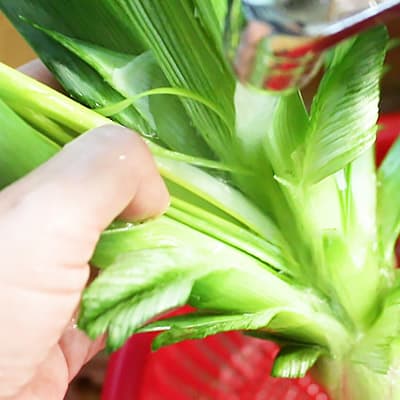
Slit lengthwise across the leaves at the top of your greens. Turn your leek and repeat to make the same cut.
If you look at your leek from top-down, you should see a cross cut into your green leek leaves. This is so that you can access the mud that is buried deep between your leek layers.
Step 3
Rinse the leeks; take your leeks through running cold water and make sure that all the mud is rinsed off. Pat dry with a paper towel to get rid of any excess water.
How to cut them?
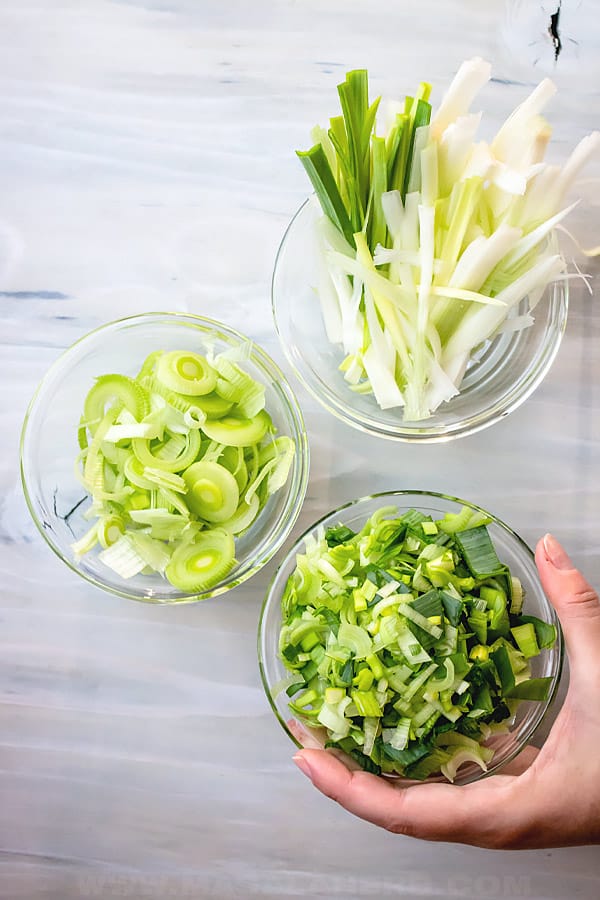
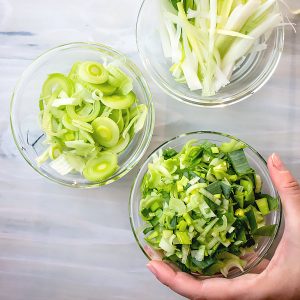
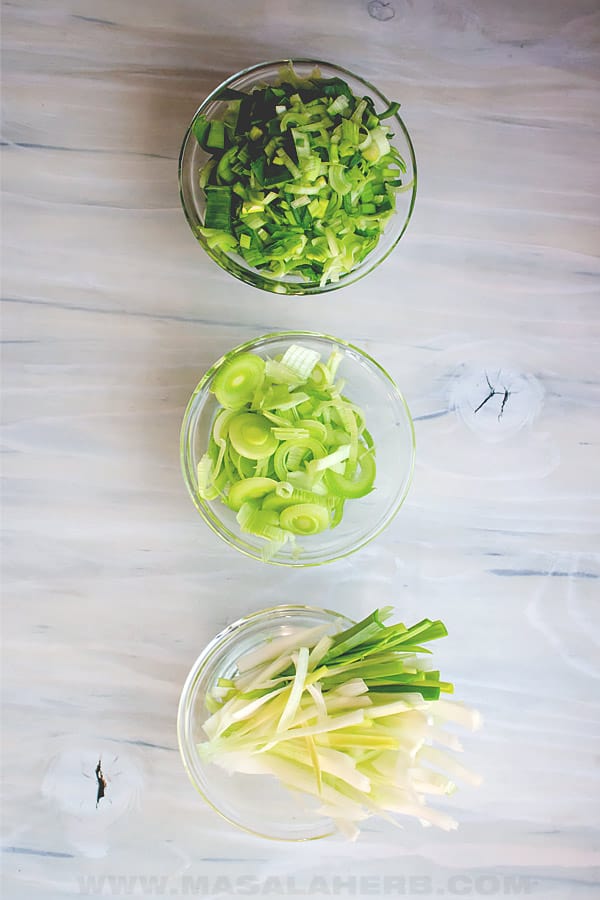
Now that we know how to clean a garden-fresh leek, let's move over to the cutting and preparing leeks part. I usually cut leeks into three different shapes: rings, slices, and sticks, which are also known as matchsticks or julienne.
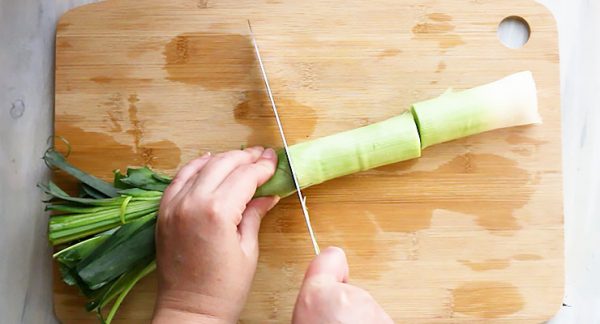
You could also cut your leek into small cubes (aka brunoise) or thick chunks, but we are going to focus on the 3 ways mentioned above. To cut your leek small, cut the whole stalk first into 3 manageable chunks so that it will be easier for you to take on the leek vegetable.
Leek cut into rings
The easiest way to cut a leek (in my humble opinion) is to cut the stalk into rings. You just grab the stalk and slice off rings; that's all there is to it.
The lower parts of your leek, close to the roots, are more suitable to be turned into rings.
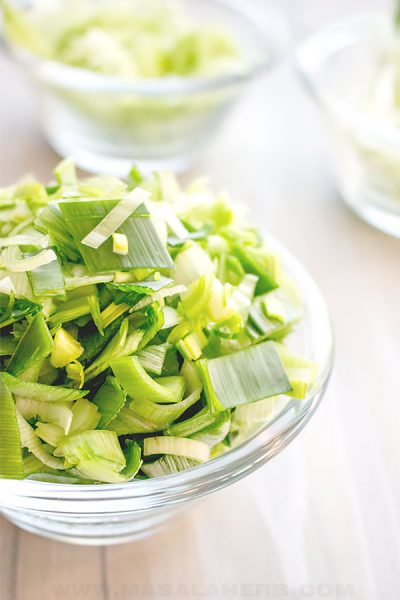
Leek cut into slices
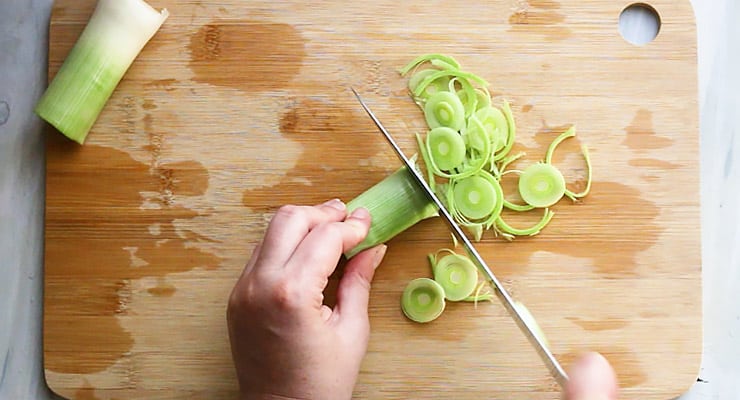
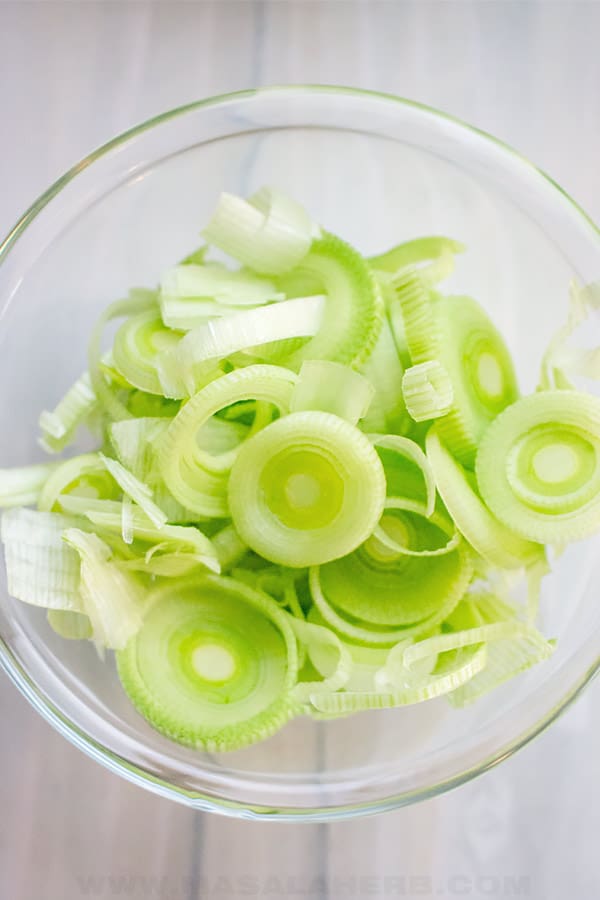
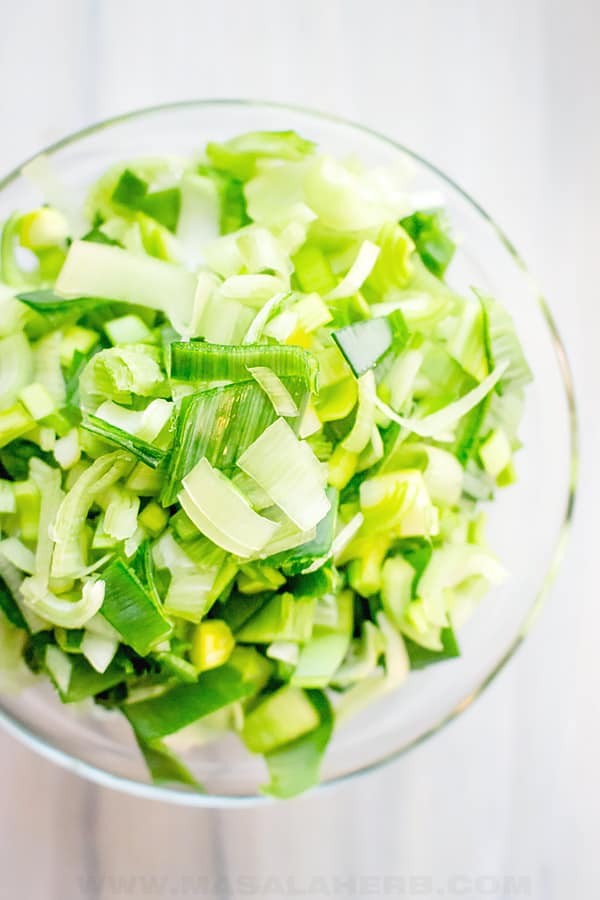
Thick or thin leek slices—you can choose how you need them. I like to cut the green parts of the stalk into slices because the leek leaves move from one another.
That way you can use the green parts really well too because we don't want to waste perfectly fresh and soft green parts. You can also cut the white stalk parts into slices by slicing the stalk into half first and then cutting the pieces off.

Leek cut into sticks
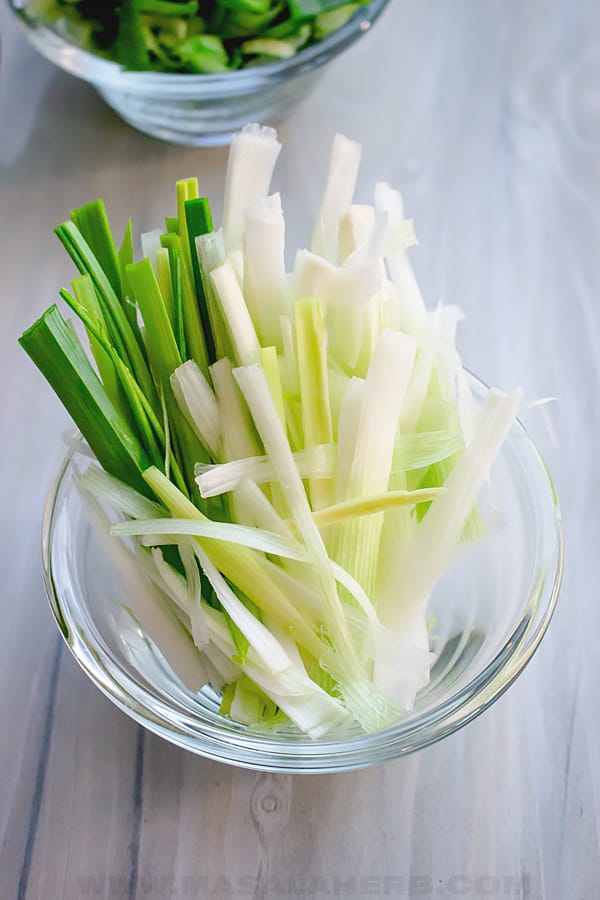
This is my least favorite way to cut leeks because it takes longer to cut leek pieces into sticks. Yet, sometimes you might need leek sticks in salad or stir-fry recipes because they look nice.
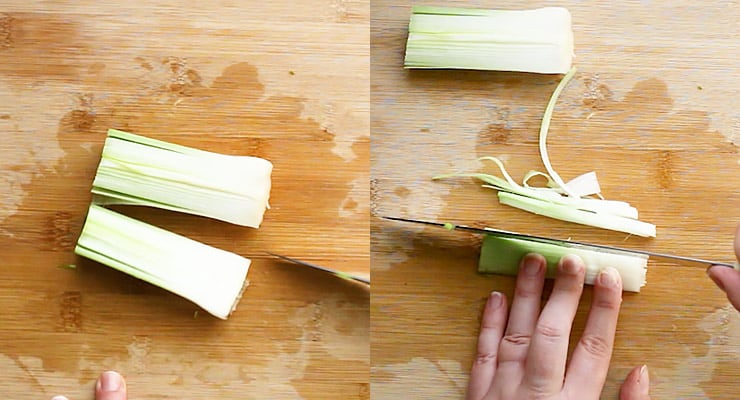
Cut your leek piece into two lengthwise. Take one into your hand and flatten it down a bit so that it's easier to cut. With a sharp knife, slice a matchstick-sized piece lengthwise off.
More details, with how to video, can be viewed at the bottom of this post in the recipe card.
📖 Recipe
How to cut Leeks
Ingredients
- 1 Leek fresh
Instructions
- Trim the leek root end off and the tough dark green stem. Cut only the fibrous part, and keep the edible softer parts of your leek.
- Discard damaged outer layer too.
- Cut into your leek lengthwise into the dark green leaves so to create a cross design. This is to wash out the mud from within the leek. Cut as deep as need be if you still see mud.
- Rinse your leek to get rid of impurities and pat dry to soak in excess water.
- Cut your leek crosswise into 3 manageable pieces.
To cut leek into rings
- Take a leek piece and slice to create full shaped rings.
To cut leek slices
- Take the green parts of your leek or cut your leek piece into two pieces lengthwise.
- Slice to create smaller pieces (please watch video).
To cut leek sticks
- Take a leek piece to hand, cut into two lengthwise.
- Take one of the two and flatten it slightly.
- Slice thin strips lengthwise of the leek to create sticks.
Notes
Nutrition
Uses
You can add your cut leek when a recipe calls for it, and you can boil, sauté, and braise them on their own.
Here are some other ideas to enjoy your cut leek pieces.
- Use leeks instead of onions on a Flammkuchen
- Switch out the Onion in a Tart
- Chunky Leek Potato Soup
- Leek Zucchini soup by fabfood4all.co.uk
Storing
Trim off the dark green leaves to shorten your leek, and you can store it already in its whole form in your vegetable basket in the fridge.
Or proceed to cut your leeks small to store the cut leeks in an airtight container or a bag so that the cut veggies are not exposed to the fridge air.
Another option is to store your cut leek pieces in an airtight container or bag in the freezer for a longer period of time until further use.
FAQs
Cut leeks will last a couple of days in your fridge before they turn all wrinkled. Don't wait too long because leeks are best consumed fresh. Frozen cut leeks will last months in your freezer.
All the soft parts, except the root, of a leek are edible. Trim off only the tough, dark green parts of your leeks. Do not waste good food.
Yes, you can! However, pick only young, fresh, tender leeks to eat raw in salads.
No. Leeks are larger and have a mild flavor; green onions are smaller, and tender but sharp in flavor.
More Vegetable Guides

Comments
No Comments