

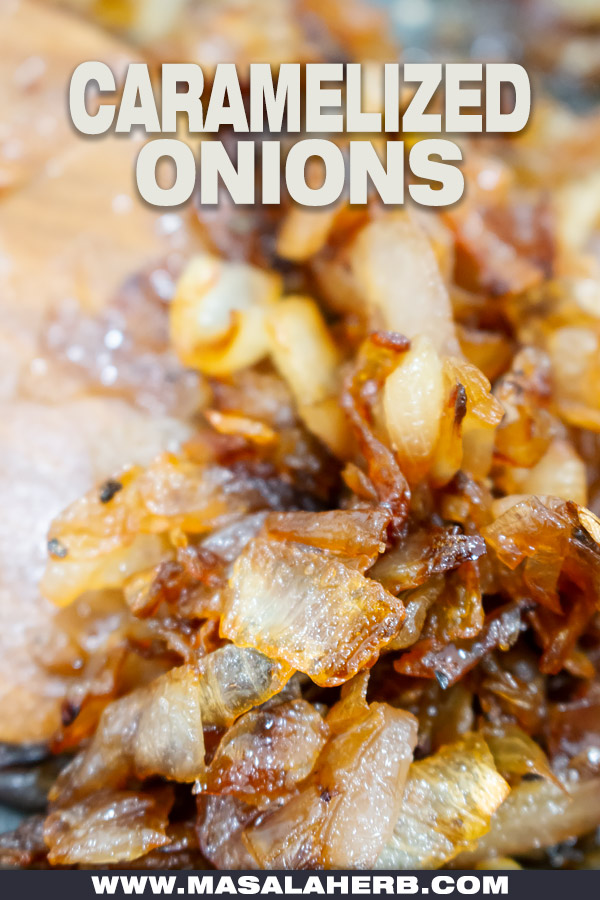
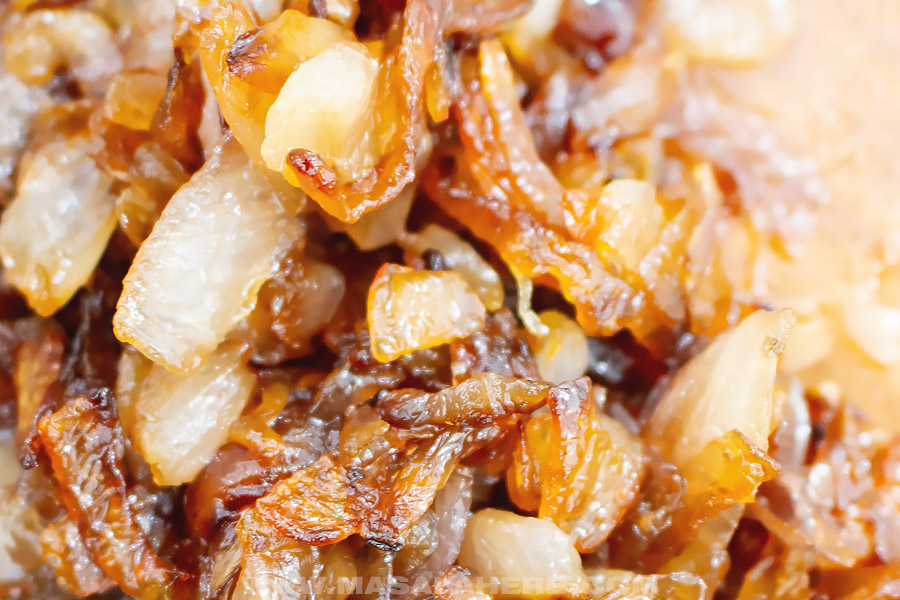
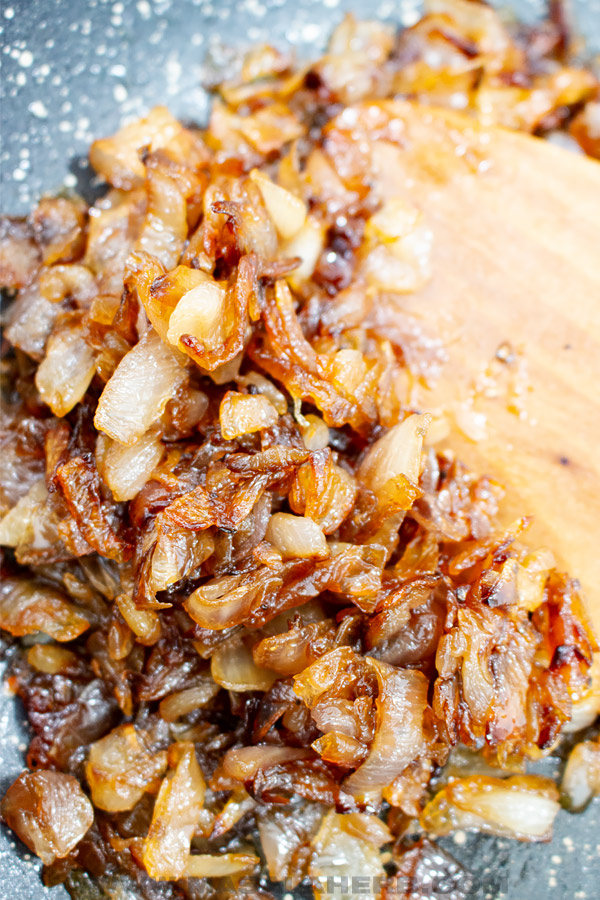
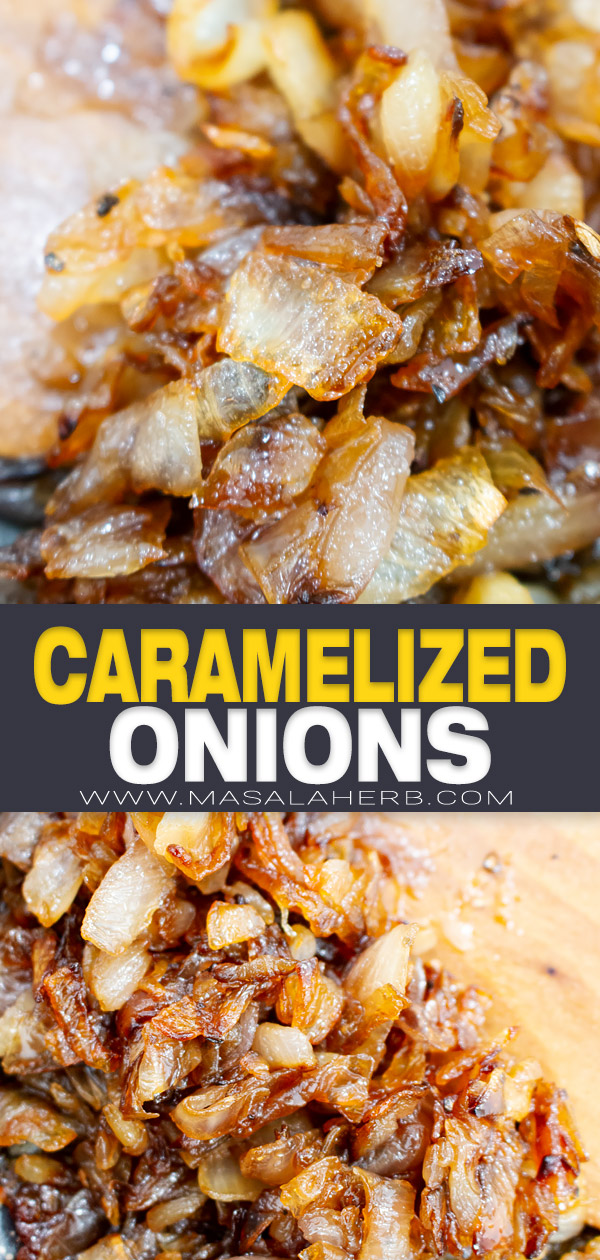
Caramelized Onion are cooked slowly in a skillet, releasing natural sweet flavors as they turn brown and super delicious!
This is a simple recipe that shows how to make it, including ideas to use your homemade caramelized onions.

Global Food Recipes
with Spices and Herbs
Free E-Book available for a limited time. Grab yours now and get instantly inspired!
You missed out!
TL;DR
Caramelized onions are slowly cooked in a skillet, and that way the natural sugars are released and “candied.” It has to be done slowly so that the onions don't burn, and that takes time.
There is no shortcut for perfectly delicious caramelized onions. But you can help yourself by using a nonstick frying pan/skillet. That way you won't need to use that many fats, and the onions are less likely to burn .
Caramelized onions are served with main course meals or in sandwiches. The uses are manifold!
Ingredient Notes
I kept this recipe simple because the onions taste great as is, but I do share some seasoning options below:
- Onions — any will do. I use red onions, but you can use yellow, white, and pearl onions too. Each onion variety has its perks, but some are definitely naturally sweeter than others. Spanish onions and Vidalia onions are super sweet, and you won't need to add sugar if you use these onions.
- Butter — Brings out all the flavor, and I don't recommend switching with other fats. Butter makes it taste so delicious when caramelized.
- Salt and Black Pepper — I like to use pink salt or another salt that tastes umami. I use freshly crushed black peppercorns for the best flavor effect.
- Sugar — I love to add some brown sugar. It's optional, so if you want to go low carb, skip the sugar. Some onion varieties don't need the addition of sugar, so if you use a sweet onion variety, also skip the sugar in this recipe.
That's it! These are the main ingredients; however, you can also add some other seasoning such as a few drops of Tabasco sauce, Worcestershire sauce, or balsamic vinegar.
Process Overview
Making caramelized onions is easy, but you need to keep an eye on them so that they don't burn.
Step 1
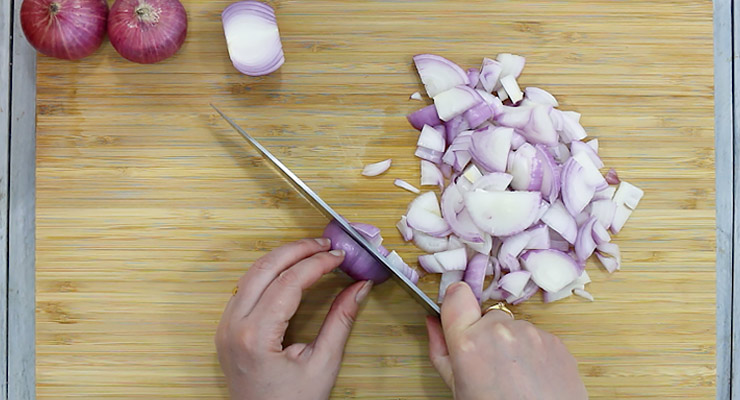
Peel and cut onions. Cut them into half or quarters and into slices. The slices shouldn't be too thick nor too thin.
Step 2
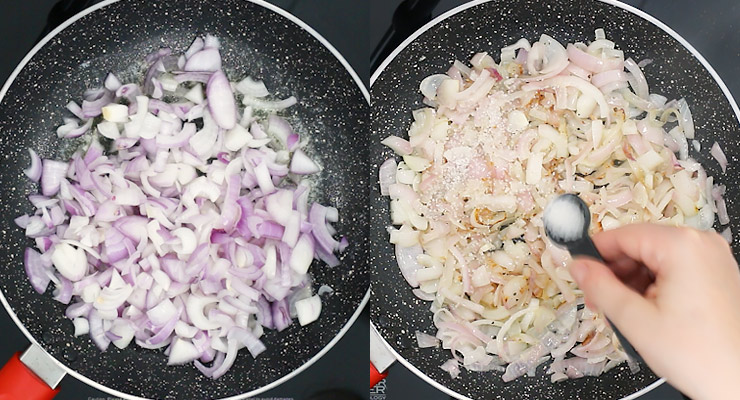
Heat up a pan with butter and add the onion. Sauté onions and season.
Step 3
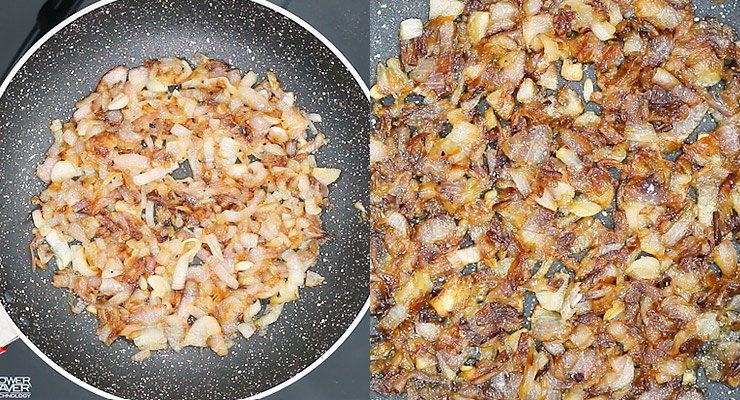
Cook onions down over a slow heat setting, stirring every now and then. This will take about 40 minutes or until you are satisfied and the caramelized onions have turned the way you like them.
📖 Recipe

Simple Caramelized Onion Recipe
Ingredients
- 3 large Onion *see Notes
- 3 Tablespoon Butter
- ¼ Teaspoon Salt
- ¼ Teaspoon Black Pepper Ground
- ½ Tablespoon Sugar optional, brown sugar is great!
Instructions
- Peel your onions and cut them into half or quarters. Cut into not too thick and not too thin slices. All should be the same.
- Heat up a pan and add your butter. Melt butter and stir in onion slices.
- Keep over a medium heat setting and sauté onions until translucent.
- Takedown the heat a notch and season with salt, black pepper, and if you want you can add sugar too. Stir mix.
- When the onions start to get some color, take down the heat further to the minimum stove setting. Or else your onions will burn and won't caramelize.
- Keep cooking it on slow heat for about 40 mins or until you are satisfied with the caramelization degree. Stir occasionally to prevent the onions from burning.
- The onions will get sweeter over time and the quantity will reduce significantly. Decide if you want them to be light brown or darker brown. Take from the heat.
- Use in your favorite food as a topping, in dinner meals, breads, dips etc.
Notes
- Pick an onion variety that you like. I used purple onions because that's what I got here. Yellow ones are more suitable, but purple onions are not that sharp too. 3 large onions equal to 5 medium-small onions.
- Use a non-stick PFOA and BPA-free skillet or frying pan. That way the onions are less likely to burn.
Equipment
Nutrition
Uses
I just eat my sweet cooked onions straight out of the pan. I can barely stop myself, but there are so many great uses for homemade caramelized onions.
You can add them to your burger, pizza, pasta, or toast. A caramelized onion dip makes for a great party appetizer.
Serve as a side dish with steak, beef tenderloin, pork tenderloin, chicken breast, sausages, or sauteed mushrooms and bell peppers.
Caramelized onions are great in egg-based dishes too, such as quiche, frittata, or omelette. I love them in our French onion tart.
You can enhance your mashed potatoes, risotto, focaccia bread, chickpea hummus and goat cheese appetizers with these sweet-tasting browned onions.
Storing
You can make these onions ahead of time. Store your caramelized onions for up to 5 days in your fridge in an airtight container. Warm them gradually up in a pan. When they sizzle a bit and they are hot enough, they are ready.
I don't recommend freezing them because their consistency will be weird when you thaw and reheat them. Except if you freeze them in batches on a tray, so that they are separated a bit from each other. You don't want clumps.
That way you can reheat them in the oven, and they will turn a bit crispy too.
FAQs
About 40-50 minutes from start to finish. Choose when they are done; they can be light brown to medium light, like mine, or darker shaded.
In the beginning, you need to simply sauté them over a medium heat setting. The onions will turn glossy, and then you need to be careful that they don't burn, so you will need to reduce the heat and stir more frequently. The onions will need to caramelize slowly so that the sugars are released at the right temperature. Keep it over the lowest heat setting until they are done and fully caramelized.
Caramelized onions are prepared by first sautéing them. The heat is then reduced and the onions are slowly cooked, which releases all the beautiful natural sugars in the onion. Sautéing is just cooking onions for a short time over a medium heat setting until they are translucent or glossy.
There is no faster method to caramelize onions.
Comments
No Comments