

![Papaya Paste - Natural Meat tenderizer - How to make & store papaya paste [+Video] - tenderizes red meat such as beef, lamb, mutton, wild game, etc naturally. Tips + video how to to tenderize with papaya paste www.MasalaHerb.com](https://www.masalaherb.com/wp-content/uploads/2017/09/Papaya-Paste-Natural-Meat-tenderizer-How-to-make-papaya-paste-1-150x150.jpg)
Did you know that papaya paste can make your meat super tender? Papaya paste tenderizes meat surprisingly well and very effectively so that the meat melts in your mouth with each bite.
Global Food Recipes
with Spices and Herbs
Free E-Book available for a limited time. Grab yours now and get instantly inspired!
You missed out!
Jump to:
TL;DR
The first time I heard papaya was used as a meat tenderizer, I didn't believe it. How could such a plainly tasting tropical fruit, which has never been much regarded as a superfruit anyway, turn tough meat cuts into tender, soft, melt-in-the-mouth meat? I thought it was a joke.
Obviously I had to try it out for myself. After having prepared the meat with papaya and cooked it the way I always do, I was completely amazed. The papaya paste on the meat was effective, successfully turning the meat into tender bites.
To make a papaya meat tenderizer, you need to pick a green/raw papaya. This is important! Green papayas are raw and have hard white fruit flesh in the inside. The green papaya is rich in an enzyme known as Papain and this is the compound that has the ability to break down meat fibers.
So, papain basically breaks down collagen, which is the main protein that connects tissues. The greener and rawer the papaya, the more papain it contains, and the stronger the paste will affect your tough meat cuts.
The highest amount of papain can be found in the papaya skin. That is why I use a green/raw papaya, with the skin on, for tenderizing meat cuts. Raw papaya is almost tasteless and not sweet at all, which makes it a suitable choice for marinating meat successfully.
By the way, also the leaves of a papaya tree are high in papain and can be used in the same way as the paste. If you use papaya tree leaves, then just wash them well and wrap the meat in it, leave it to “marinate,” cook, and enjoy a perfectly cooked piece of meat.
Process Overview
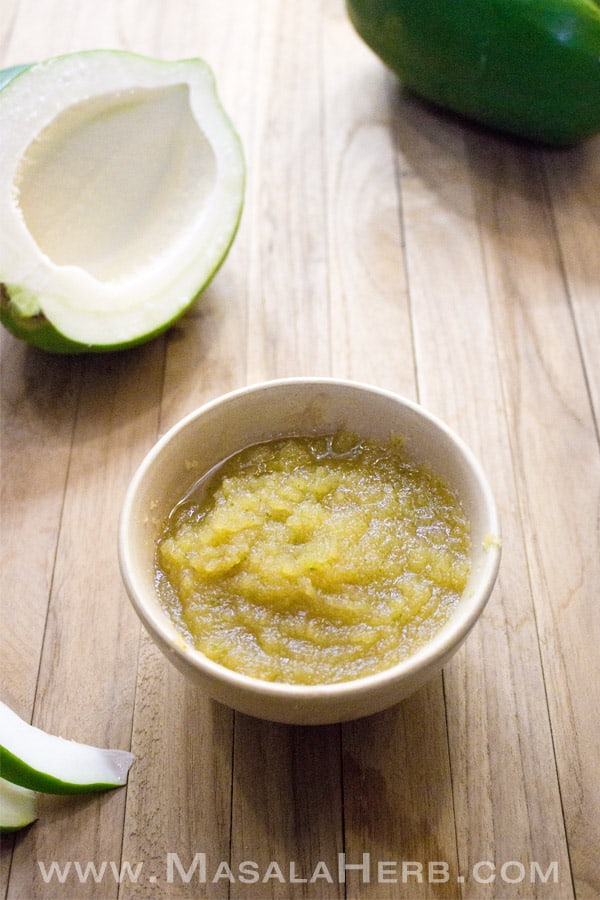
Making papaya paste is actually child's play. You need to turn the papaya into a smooth puree. There's no need to add any additional ingredients or flavor the papaya paste.
All it takes to work is a little water and a fresh green papaya with the skin on! Just make sure to discard seeds if there are any.
I decided early on to keep it tasteless, as I would use the paste on different kinds of red meats, and in that case, I like to season them individually at times.
📖 Recipe
![Papaya Paste - Natural Meat tenderizer - How to make & store papaya paste [+Video] - tenderizes red meat such as beef, lamb, mutton, wild game, etc naturally. Tips + video how to to tenderize with papaya paste www.MasalaHerb.com](https://www.masalaherb.com/wp-content/uploads/2017/09/Papaya-Paste-Natural-Meat-tenderizer-How-to-make-papaya-paste-1-300x300.jpg)
Papaya Paste Meat Tenderizer Recipe
Ingredients
- 1 small Green Papaya aka raw papaya, the greener the better
- Water
Instructions
- Make sure to pick green papaya (not orange) and wash it well before cutting it up.
- Cut the fresh raw papaya into chunks with the skin on the papaya.
- Then place the chunks into a blender jar with some water and blend into a smooth paste. don't add too much water, just enough so that the blender blades turn.
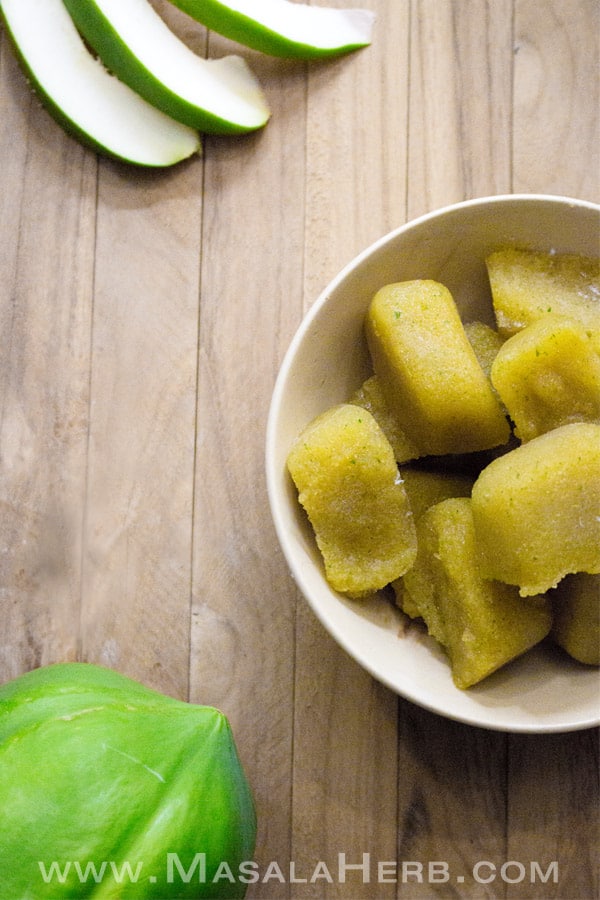
- Keep ice trays ready and fill up each with 1-2 tablespoons. freeze and once frozen places carefuly into a ziplock bag.
- Use each papaya paste cube whenever needed. See post for how to use and how much to use.
Nutrition
Storing
Because green/raw papayas are not always easy to find in the market and because you mostly need only small amounts of the paste to your meat, it makes sense to store the papaya paste for the long run.
While you could keep some in a jar in the fridge, I wouldn't suggest you do that with a bigger batch of freshly made papaya paste. Papaya has a high tendency to get moldy, especially the ripe pulp, but unfortunately also the unripe version of the fruit.
So while some people recommend that they keep theirs for a week or two in the fridge without a problem, I wouldn't necessarily do that because water is added to the paste, which accelerates spoilage.
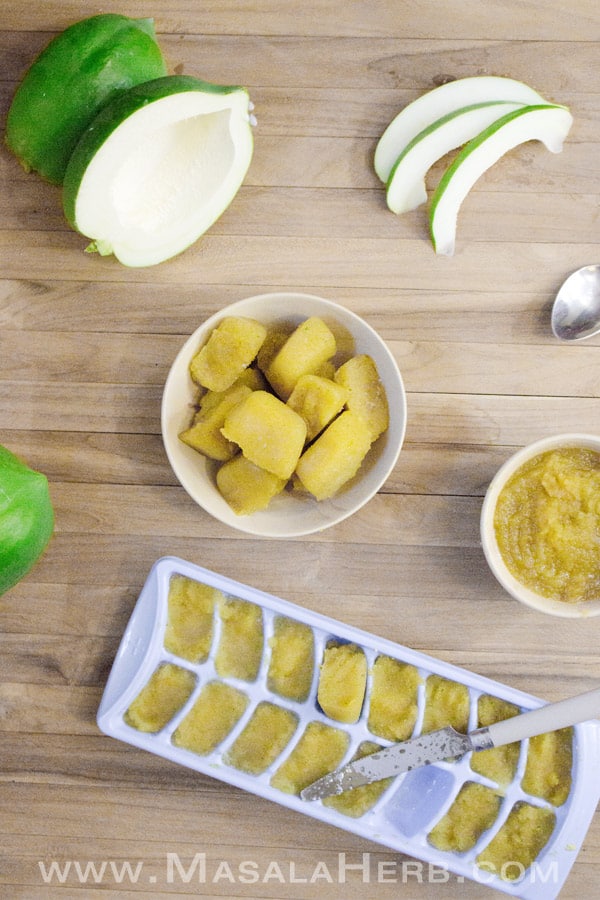
So I decided to just freeze the papaya paste by adding small batches of 1-2 tablespoons to ice cube trays.
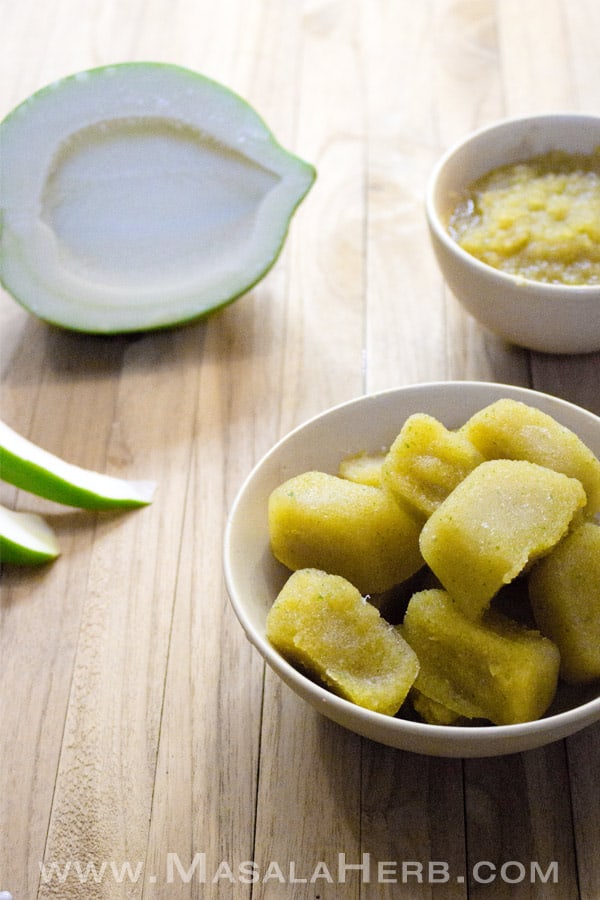
After they have frozen, all you have to do is remove them and put the papaya paste cubes in zip-lock bags. Whenever you need to use the paste, take out a cube or two, or whatever quantity is needed, let it defrost, and treat your meat with the paste. It's that simple!
How to Use the Paste on Your Meats?
The papaya paste is like a paste in addition to your usual marination. There are two ways you can prepare and marinate your meat with the papaya paste:
Papaya paste first, your usual marination after that.
You keep your meat cuts ready and add the papaya paste to it. I like to massage the paste into the meat with my fingers.
Then I keep it for a certain period, depending on the meat and amount, and either remove excess papaya paste or leave it on and add my marination to the meat so that the meat soaks in the flavors.
OR
Papaya paste and marination on the meat together
How to marinate the meat and for how long depends on the following:
- meat type - beef, lamb, mutton, pork, rabbit, deer
- meat quantity
- how the meat is cut - in cubes, slices, etc
- meat quality and fat amounts
- papaya variation, papaya rawness, and if you added the papaya skin to the paste
Know this: the leaner the meat, the better the quality; the less the amount and the smaller the cut, the less papaya paste you will need, and the faster it will take you to tenderize successfully.
That means, for example, if you use 1 kilogram of not-so-high-quality undercut beef cut into big chunks and you want it to be tender after 30 minutes, you would add about 2 defrosted papaya paste cubes to the meat. It will turn out super tender!
For 2 smaller undercut steaks, I add about 2 tablespoons (= ~1 cube) of papaya paste to my beef. Then I let it on for 20 minutes and add my usual steak marination so that it infuses the flavors. I keep it on for another 40 minutes max before cooking the meat.
So if you are intending to marinate the meat for a longer period to infuse the flavors, you might want to treat the meat first separately with the papaya paste and then take off excess papaya paste.
Or you reduce the papaya paste amount to small quantities so that you can marinate the meat over a longer period of time. How much papaya paste you use on your meat to tenderize is up to you; there is no fixed amount that I can tell you here.
If you get hold of a smaller, very green papaya and you would use only the skin but not the pulp, you would have to cut the time again by half at least because the skin alone is a very strong tenderizer!
So you get my point. Try to work with small quantities first so that you get the feel for it. Each meat works differently too.
Try to use my examples to get an idea for how long and how much to use. Of course, you can also combine other tenderizing solutions with a small amount of papaya paste.
I like to pound my meat first, and that is known to break down tough fibers as well. Then I rub salt into the uncooked steak and ginger paste (if it's an Asian dish), as ginger and salt both help in cutting down the tenderizing waiting period.
After that, add some papaya paste, wait for 20-30 minutes, and you are good to cook your steak soft!
Tips
The papaya paste is so powerful that meat fibers can de-integrate completely, and you would be left with meat pieces or even an unappetizing meat mash.
Besides, keeping excessive quantities of papaya paste on the meat for far too long can turn the meat dry while cooking.
That is why you should use the papaya paste in small quantities only, and whenever you do that, you should check on the meat after a certain time to see if it has marinated enough.
The moment the papaya paste is heated up, it stops affecting the collagen proteins in the meat, but don't worry, the meat will be guaranteed to turn out tender.
Buying Tips
Green Papaya Paste can't be purchased so far. Food companies haven't developed such a product yet. However, you can buy a green papaya powder instead, which can be used instead of the green papaya paste.
I haven't tried it myself, so I can't advocate it, but at the same time, I took a while to search a decent option but ended up finding this green papaya leaf powder.
The manufacturers claim all kinds of weight-loss wonders, which you can safely ignore. You want a clean product that can be used as a tenderizing agent on your meat. That's it!
Papaya Paste Uses
Remember you can use the papaya natural meat tenderizer paste with any red meat such as beef, veal, pork, lamb, mutton, goat, rabbit, boar, and deer.
There is no point in using papaya paste for chicken, turkey, or duck meat, as these get easily soft while cooking, depending on the cooking technique and heat.
Comments
No Comments